

Last Updated: October 25, 2026
When Whimsy Feels Like Home
I have been thinking about the moment a room stops feeling like a room and starts feeling like a story of who your family is.
It is not necessarily because there is a lot in it. Sometimes it is only a worn book on a shelf, a fox in a picture frame, a little pile of rocks someone brought home from a walk, or a curtain that moves gently when the window is open.
That is what whimsical home decor for families is really about to me.
It is not about making every room look like a set from a storybook. It is about gathering a few things that remind us the world is still interesting. That there are hidden worlds under the grass, mysterious lights in the woods, musical animals, faraway places, and ordinary afternoons that deserve to feel a little softer.
A room can be playful and peaceful at the same time. It can feel sophisticated enough for the grown-ups who live there, while still making room for children to be children.
Nature Inspired Whimsical Decor Ideas
The most beautiful rooms are not always the ones that look perfect in photographs.
I am drawn to rooms that look as though a family has slowly made a life inside them. A chair that gets sat in. Books that spill a little. A favorite art print that has moved from the nursery to a bigger child’s room. A quilt that has softened with use.
That is part of why I love nature-inspired decor. Nature gives us so many things that do not need to be forced into a trend: woods, wildflowers, birds, sea creatures, stars, mushrooms, clouds, tree branches, and the little animals a child might spend years noticing.
These things can be part of a room without becoming a full theme.
A woodland wallpaper might be the starting point, but the rest of the room can hold warm wood, a vintage nature guide, a cream gingham curtain, a brass lamp, a hand-me-down quilt, and whatever small things your child begins to love. The room can suggest the woods without asking every object to become a forest animal.
That is the kind of lasting whimsy I am after: a little story, with room for real life to keep happening around it.
Color as a Foundation
I like beginning with colors that feel familiar in the natural world.
Soft greens can feel like moss underfoot. Muted blues can remind us of lake water or a patch of sky between branches. Warm creams hold morning light. Earthy browns can feel like bark after rain, old books, and the warm wood inside a cottage.
These colors do not have to be pale to feel calm. A grayed green, faded blue, muted floral, or deep brown can all become part of a quiet foundation when they have softness in them.
Then I like adding one or two more playful notes: a rich blue, a deep green, a little storybook red, gold, rust, or plum. Those are the colors that keep a room from feeling too careful.
The point is not to follow a perfect palette. It is to choose colors that feel as though they came from the same little world.
Design trend reporting from ELLE Decor on Zillow's 2026 Home Trends Report shows that mentions of whimsical touches in home design climbed 15% this year.
Textiles and Soft Touches
Textiles are some of the easiest ways to make a room feel like it belongs to the people inside it.
A simple curtain, a patterned quilt, a woven rug, a pillow in a reading chair, or a small piece of fabric tucked into a basket can add warmth without asking you to redo the room. They are also the things children actually touch, carry around, lean on, and make part of their everyday lives.
I like natural-looking textures: woven fibers, cotton, linen, warm wood, soft rugs, faded gingham, and fabrics that do not feel too precious to use.
The Woodland Lullaby Pillows are meant to be little characters who can live inside that kind of room. A bear with a bass, a deer with a cello, a fox with an instrument, and squirrels making music together. They do not need a whole matching orchestra around them. One favorite animal can be enough.
Whimsical Kids Room Ideas for Every Age
I do not think a room needs to stay exactly the same as a child grows. In fact, it should not.
The useful thing about starting with a calm, versatile foundation is that the room can change without having to be torn apart and started over every few years.
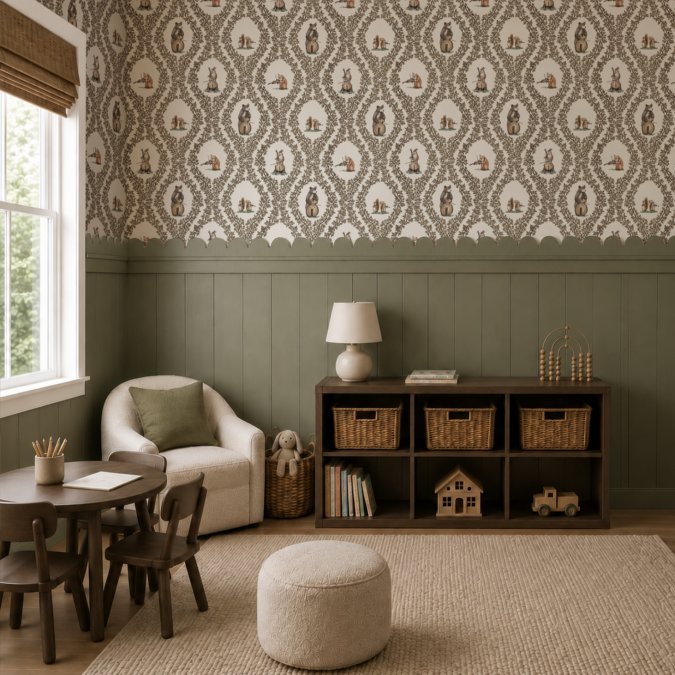
The Infant and Toddler Years: Build the Bones, Not the Show
When children are very small, you are often the one spending the most time looking at the room. You are the one standing in the doorway at the end of the day, sitting in the rocking chair, or trying to find one more clean crib sheet.
This can be a lovely time to choose the steadier things: a paint color you enjoy living with, useful storage, a comfortable chair, a rug that can handle real life, wallpaper you would still like when the baby stage is over.
I would keep the infant sleep space clear, but let the rest of the room hold personality. Art, books, wallpaper, a reading chair, and decorative pillows in places outside the crib can make the room feel warm without making it difficult to use.
Choose a few things you genuinely love. You do not have to create every bit of magic before the baby arrives.
The Growing Years: Let Them Have a Say
As children get older, they begin to show you who they are.
Maybe they become deeply devoted to foxes. Or whales. Or bugs. Or music. Or maps. Or a specific blue crayon they insist is the best blue. Those small preferences can become the next layer of the room.
You do not need to hand over every decision or turn the room into a new theme each year. But you can make space for their voice.
A few gentle ways to let a room grow:
- Keep larger pieces—furniture, curtains, a rug, or wallpaper—fairly steady.
- Let smaller pieces carry the current interest: art prints, pillows, bedding, a lamp, books, or one shelf of treasures.
- Give them a low shelf, wall, or corner they can arrange themselves.
- Let the room look a little used. A space where children make things, read, and dream does not usually look like a catalog photograph.
A room that grows with a child is not a room that stays frozen. It is a room that can keep making space.
Woodland Nursery Decor That Feels Intentional
Woodland decor is easy to love because it already holds so much story. But I think it becomes more interesting when it is personal instead of perfectly matched.
Maybe woodland means a wallpaper full of animals and sage leaves. Maybe it means a mushroom-shaped lamp, a favorite fox print, a thrifted basket, a little wooden bird, and a stack of old books about forests. Maybe it simply means warm wood and green curtains because the woods are where your family feels most like yourselves.
All of those things can belong.
The difference between a room that feels collected and one that feels cluttered is not whether every object matches. It is whether each thing has a reason to be there.
You might choose something because it reminds you of a place you love. Because it was made by someone in your family. Because your child carries it everywhere. Because it is useful. Because it makes you laugh. Because it has stayed with you long enough to become familiar.
That kind of room will always feel more alive to me than one assembled from a checklist.
Pattern and Personality Without Chaos
I love pattern. I love a little floral beside a stripe, a small animal print near gingham, and the way warm wood can calm down a room full of interesting things.
Pattern is not automatically chaos. A room full of pattern can feel like a big hug.
The trick is not following a strict formula. It is letting the patterns feel as though they are in conversation with one another. They might share a color, a softness, a sense of age, or simply a feeling you like.
A few things I pay attention to:
- Do the patterns share a color or feeling, even if they are not identical?
- Is there somewhere for the eye to rest: a quiet curtain, warm wood, an open wall, a woven rug?
- Does each piece have its own job? One pattern can carry the story, another can add texture, and another can be a tiny playful surprise.
- Do you actually enjoy looking at them together?
A pattern-drenched room can be wonderful. So can one wallpaper wall with painted walls around it. The right amount is the amount that feels good to the people living there.
Small Decisions That Transform a Space
I do not think every change has to be dramatic or expensive.
Sometimes whimsy begins by noticing what is already there: the chair with the good shape, the lamp that makes a corner feel warm, the basket that could hold books instead of toys, the art print waiting in a drawer, or the small table that needs a child-sized chair beside it.
Before buying something new, I would walk through the room and ask: what is already asking to be noticed?
A lot of beauty comes from rearranging, layering, rotating, and letting things move from one room to another. That is not only kinder to a budget. It is also a gentler way to live with less waste.
The Changeable Layer Is Where Your Money Goes Furthest
The smaller pieces are where a room can keep changing its mind.
Art prints, pillows, a quilt, a basket, a small lamp, a curtain tieback, and a favorite book can shift the feeling of a room without requiring a whole renovation. These are wonderful places to follow your child’s latest interest or your own growing sense of what the room needs.
I think of it in three layers:
- The free layer: rearranging, rotating what you own, bringing in a book or basket from another room, or finally hanging the art you already have.
- The small layer: a print, pillow, small rug, lamp, basket, or textile that adds a new bit of color or story.
- The lasting layer: wallpaper, a large rug, paint, or furniture. These are worth choosing slowly and with enough flexibility that they can stay through several seasons of childhood.
Choosing a little more slowly does not mean a room will be boring. It often means it will have more chances to become yours.
Make Room for the Everyday Mess
A whimsical home still has to hold school papers, shoes, toys, laundry, snack crumbs, and the general hullabaloo of family life.
If there is nowhere for those things to go, even a beautiful room can start to feel like a fight.
I like treating storage as part of the room rather than something to hide. A woven basket by the door. A low shelf with bins children can reach. A tray for rocks and small treasures. A place for books that are currently being read, rather than pretending they will all live neatly on the shelf.
The goal is not perfection. It is making it easier for the room to return to itself after a real day.
The Quiet Corner: A Room Within a Room
Some children need a small place where they can read, rest, build, think, or simply be without being watched too closely.
That does not require a whole separate room.
It can be a chair beside a bookshelf, a cushion by a window, a little space under a table, or a corner with a soft rug and a basket of books. Add one pillow, one lamp, one favorite picture, and let it be enough.
A quiet corner does not have to solve every hard feeling. I just think it can offer a small reminder: you are allowed to take up space here. You are allowed to be yourself.
Starting Your Own Whimsical Story
Every home tells a story. The question is whether it sounds like the people who live there.
Whimsy does not have to be perfect, themed, expensive, or carefully arranged. It can be a fox in a frame, a forgotten flower pressed inside a book, a tiny collection of beach stones, or a pillow that makes your child smile every time they see it.
Start with one thing that feels true.
Then add another thing that answers it.
Let the room grow slowly. Let the books spill a little. Let the child who lives there leave some evidence of their own becoming.
That is when your home starts to have a lighter whimsical heart.
Frequently Asked Questions
How do you make whimsical home decor feel cozy rather than cluttered?
Choose a calm foundation, then add playful pieces slowly. Repeat a color, texture, or feeling so things belong together, and leave some open space for the eye to rest. A collected room does not have to be perfectly matched; it only needs to feel like each thing has a reason to be there.
Can whimsical decor work in a minimalist home, or does it only fit cottagecore style?
Yes. Whimsy does not have to mean abundance. A simple room can hold one story-carrying piece: a favorite art print, a patterned curtain, a handmade pillow, or a little animal that makes someone smile. The magic can live in the detail.
How can I decorate a child's room so it can grow with them?
Choose larger pieces that can keep doing their jobs useful furniture, a rug, curtains, paint, or wallpaper you still enjoy then let art, books, textiles, and smaller decor change as your child grows. Keep the foundation steady and let personality arrive in layers.
What makes whimsical decor actually create a calm, imaginative space?
Genuine whimsy invites slowness and discovery. It's not about stimulation or cuteness; it's about creating room for a child's own imagination to expand. Nature-inspired motifs—woodland animals, botanical patterns, gentle landscapes—connect children to the world beyond screens. When a room feels like a storybook or a quiet forest, children naturally settle into play and creativity rather than overstimulation. The key is balance: enough personality to spark wonder, enough calm to allow focus. A well-designed whimsical space feels like an invitation to dawdle and dream.
Join our email list to discover more ways to bring whimsy, wonder, and intention into your home and your family's everyday life.
